
The Architecture of
Freedom Intelligence.
By Gonçalo Melo de Magalhães · Planta Smart HomesEverything follows the lightest path according to its perception.
Candidate Law of Navigability — under falsifiable testing
Research programme · Proposed framework
Five theses. One research programme.
AFI connects theoretical work on possibility and navigability to the practical work of Planta Smart Homes on agentic AI for buildings and adaptive physical environments. It is not an established universal law.
Freedom = (Perception / Distortion)^(α∞)
F = (P/D)^(α∞)
F: Freedom · P: Perception · D: Distortion · α∞: the proposed recursive exponent. The P in FLRP means Physics, not Perception. A readable proposal, not a validated physical equation.
- 01Causal Freedom
Passibility: the structured availability of possible continuations, proposed as a condition of change and causation.
- 02The Law of Freedom
Everything follows the lightest path according to its perception. A proposed expression of navigability, not an established universal law.
- 03FLRP Architecture
Freedom → Logic → Relationships → Physics. Physics in FLRP is distinct from Perception in the equation.
- 04Mutual Dependency
The first three theses are proposed as interdependent parts of the framework.
- 05Freedom Intelligence
Improving perception, reducing distortion, revealing possibilities and opening paths; bringing perceived possibilities closer to real possibilities.
Theoretical claims
Definitions and the proposed law remain open to criticism and falsification.
Computational tests
Reported simulations apply to their stated models and conditions, not to all physical systems.
Physical validation
Field applications do not validate a universal law. Architectural programmable matter remains a research proposal.
Freedom
How many paths stay open?
Perception
What the system can resolve.
Distortion
What blocks or hides a path.
Recursive closure
How hard the state locks.
Freedom gives possibility.
Perception reveals possibility.
Distortion bends possibility.
Recursion carries possibility forward.
Physics makes one possibility real.
Reality is not static.
It is a wave — and a mix of waves.
Even a wall is a wave you agreed to call solid. F = (P/D)α∞ is the tuning knob: how much possibility survives distortion as the wave closes into form.
Seeing is a wave collapsing.
Every word is a pressure wave.
Solids are the slowest waves.
Crowds, traffic, demand — all waves.
A house filters waves.
Health is wave coherence.
Before form,
possibility.
No possibility. No change.
Passibility is the structured availability of possible continuations, proposed as a condition of change and causation.
- A state with zero outgoing paths freezes.
- One restored path resumes reality.
- Intelligence begins where alternatives begin.
The lightest perceived path.
AFI proposes that everything follows the lightest path according to its perception. This remains a candidate law, not established science.
Lower bandwidth merges paths into clusters; hidden options disappear from perception.
Reveal a hidden path. Choice changes.
FLRP — the operating architecture.
Proposed hierarchy: Freedom → Logic → Relationships → Physics. P means Physics here; it means Perception in F = (P/D)^(α∞). The scene illustrates the proposal, not a deployed transforming building.
Remove one layer.
Everything fails.
AFI proposes that its first three theses are mutually dependent. These illustrative ablations explore the framework; they are not physical validation.
Reveal possibilities.
Open paths.
Solid when stability is lightest.
Fluid when transformation is lightest.
Freedom Intelligence proposes improving perception, reducing distortion and bringing perceived possibilities closer to real possibilities. Reversible solidification is one possible architectural application, not the fifth thesis itself.
Conceptual programmable-matter sequence. Architectural-scale transformation requires prototypes and physical validation.
AFI becomes physical through PlantaOS.
Simulation forecasts consequences. Sensors falsify them. PlantaOS realises the lightest admissible spatial state and verifies stability.
Data is a trace.
Flow is the event.
Form is flow made persistent. Move the space and every flow rearranges.
Planta Smart Homes explores reversible solidity.
- · Walls stuck where they were placed.
- · Rooms cannot follow changing life.
- · Heat trapped in the wrong zone.
- · Fixed privacy, fixed access, fixed use.
- · Transformable topology.
- · Reversible solidification.
- · Adaptive airflow, heat, light.
- · Verified stability after each transformation.
The same walls,
eight lives.
Real cases,
distinct from validation.
Field work, institutional programmes and conceptual applications have different evidence levels. None establishes AFI as a universal law.
Anonymous WC guidance and occupancy intelligence.
A plant read as a wave.
Climate-adaptive building AI.
Housing against energy poverty.
Conceptual reversible architecture; physical validation required.
Light, air, sound — coupled waves.
When the system cannot see a better path.
Options collapse into one grey cluster. A living system reopens it.
Freedom = (Perception / Distortion)α∞
Gonçalo Melo de Magalhães
Founder & CEO · Planta Smart Homes · Planta Design
Also publicly known as Gonçalo Melo de Magellano and Gonçalo Melo.
Author of the Architecture of Freedom Intelligence (AFI™) — a framework for possibility, perception, flow, intelligent physical space, and reversible form.
Planta Smart Homes is where the theory becomes space.
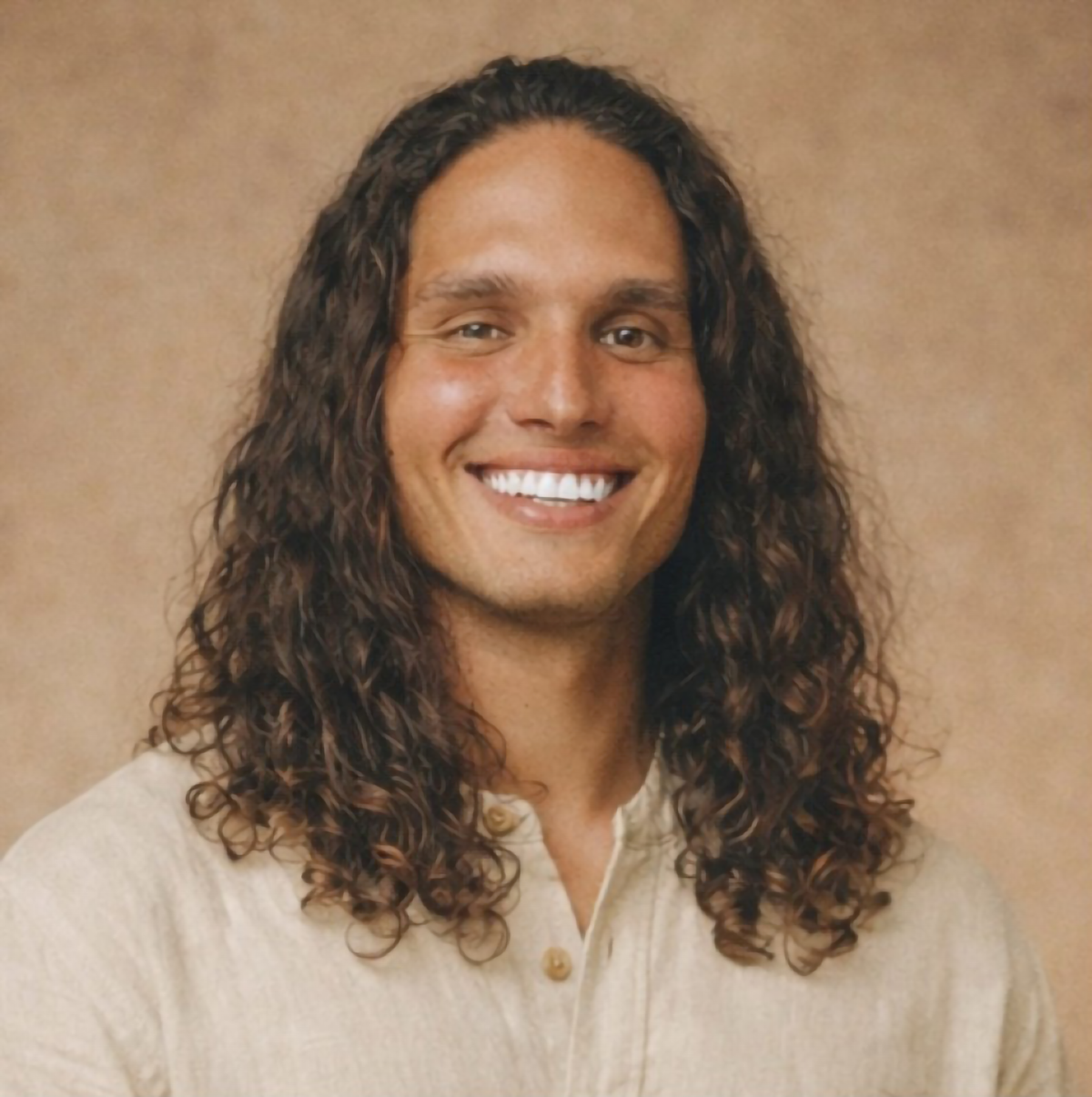
The Architecture of Freedom Intelligence is authored by Gonçalo Melo de Magalhães, also publicly known as Gonçalo Melo de Magellano and Gonçalo Melo, Founder and CEO of Planta Smart Homes. These are public name variants of the same person, not a change of legal name.
Sources include preprints and repository deposits. DOI registration, ORCID listing and institutional access do not establish peer review or independent scientific validation. Research records and publication status · Author and source profiles.